If you're buying a dual-cab to carry work, the number that matters isn't the length of the ute. It's the gap between the wheel arches inside the tub. A standard Australian pallet is 1,165mm square. Every Ranger pick-up we list has 1,217mm or more between the arches. The Triton has 1,135mm. So the short answer: an Australian pallet sits flat on a Ranger floor and doesn't on a Triton's, while a Euro pallet goes in both.
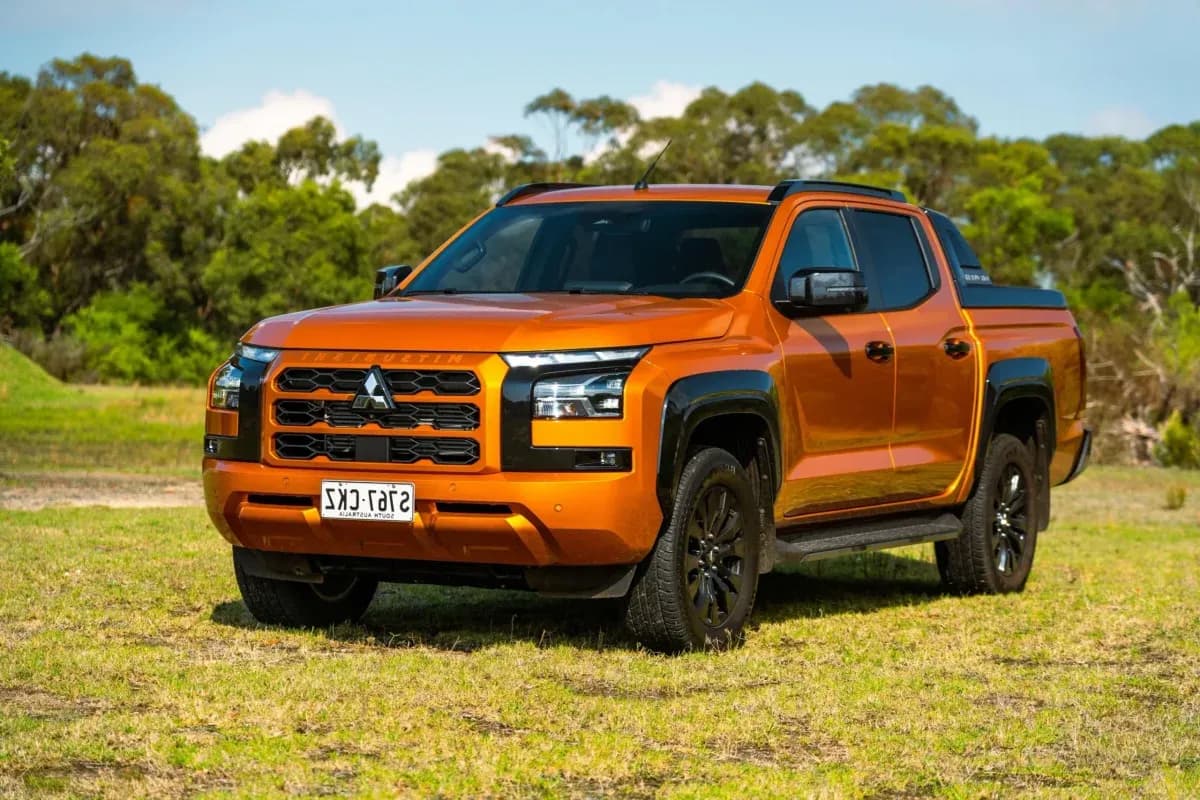
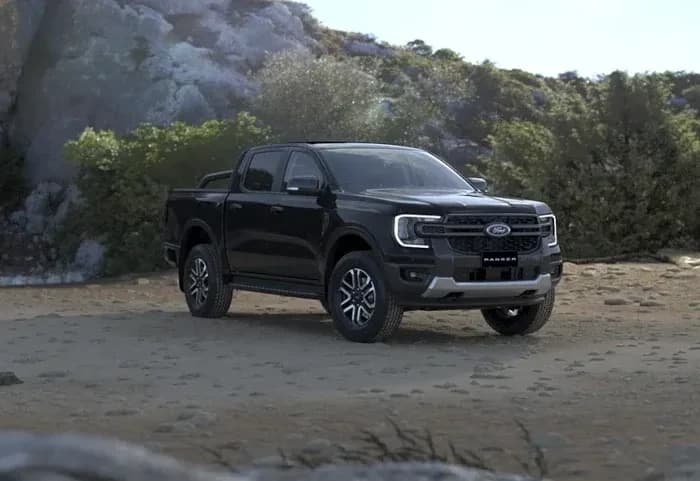
The tub, measured
These are the floor measurements of the factory pick-up tub, taken from each row. Ranger trays vary by grade, so the main pick-up grades get their own column. The six main Triton grades share one tub. (The Premcar-built Triton Raider row records a narrower 1,095mm between the arches, so it isn't in this column.)
| Tray (mm) | Ranger XL 2.0 BT | Ranger XLT / Wildtrak V6 | Ranger PHEV XLT | Triton GLX-R / GSR |
|---|---|---|---|---|
| Floor length | 1,547 | 1,464 | 1,605 | 1,555 |
| Tub width | 1,584 | 1,520 | 1,520 | 1,545 |
| Between wheel arches | 1,224 | 1,217 | 1,217 | 1,135 |
| Tub depth | 529 | 525 | 498 | 526 |
| Payload (kg) | 994 | 931 / 950 | 973 | 1,093 / 1,030 |
| GVM (kg) | 3,250 | 3,280 / 3,350 | 3,500 | 3,200 |
Up top, the Triton tub is wider than the V6 and PHEV Rangers (1,545mm against 1,520mm), but it narrows much more at the arches. That's the trade: Ford's gap between the arches is 82 to 89mm wider.
Pallet by pallet
This is the same test our cargo planner runs: does the pallet sit flat between the arches, and how much floor is left behind it?
| Pallet | Ranger XL 2.0 BT | Ranger XLT / Wildtrak V6 | Ranger PHEV XLT | Triton GLX-R / GSR |
|---|---|---|---|---|
| Australian, 1,165 x 1,165mm | Fits, 382mm floor left | Fits, 299mm left | Fits, 440mm left | Over arches, 30mm too wide |
| Euro, 1,200 long x 800mm wide | Fits, 347mm left | Fits, 264mm left | Fits, 405mm left | Fits, 355mm left |
| Euro, turned sideways (1,200mm across) | Fits, 24mm to spare | Fits, 17mm to spare | Fits, 17mm to spare | No, 65mm too wide |
“Floor left” is the tray floor length minus the pallet. “To spare” is the gap between the arches minus the pallet. Both are plain subtractions of the figures above.
The Triton and the Australian pallet
At 1,135mm between the arches, a 1,165mm pallet can't sit on the Triton's floor. It would have to rest on top of the arches, which raises the load and changes how you tie it down. The Euro pallet is the Triton's answer: it goes in lengthways with 335mm of spare width between the arches, and Mitsubishi's own 26MY brochure makes the same point, saying the cargo bed has enough room for a 1,200 x 800mm Euro pallet.
Two Euro pallets in a Ranger PHEV?
Turned sideways, two Euro pallets need 1,600mm of floor. The Ranger PHEV XLT row has 1,605mm. That's 5mm, which is inside the tolerance of any published dimension, so treat it as a maybe you test with a tape measure, not something to plan a delivery run around. No other row compared here gets close.
Cars in this story
2 cars
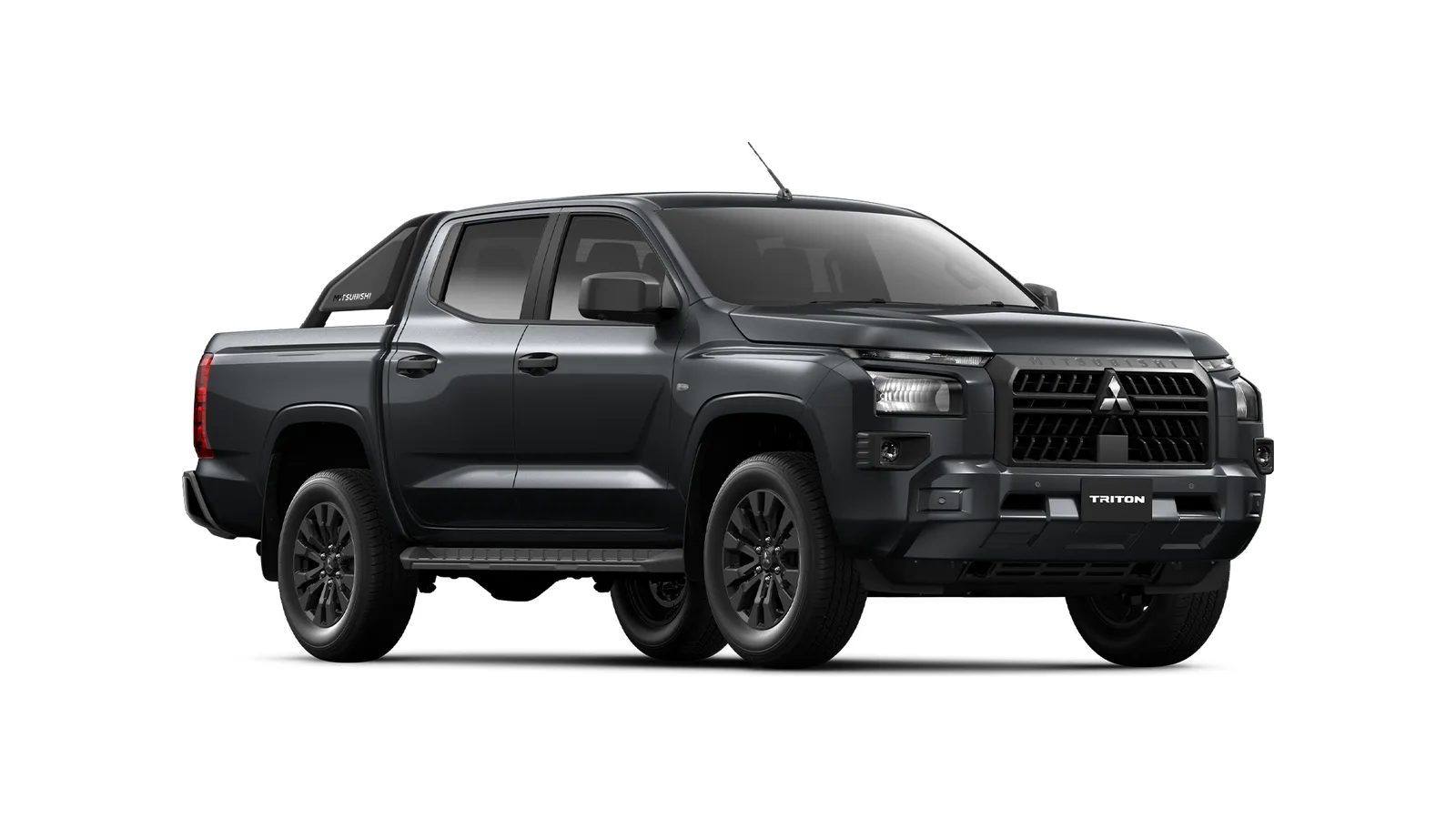
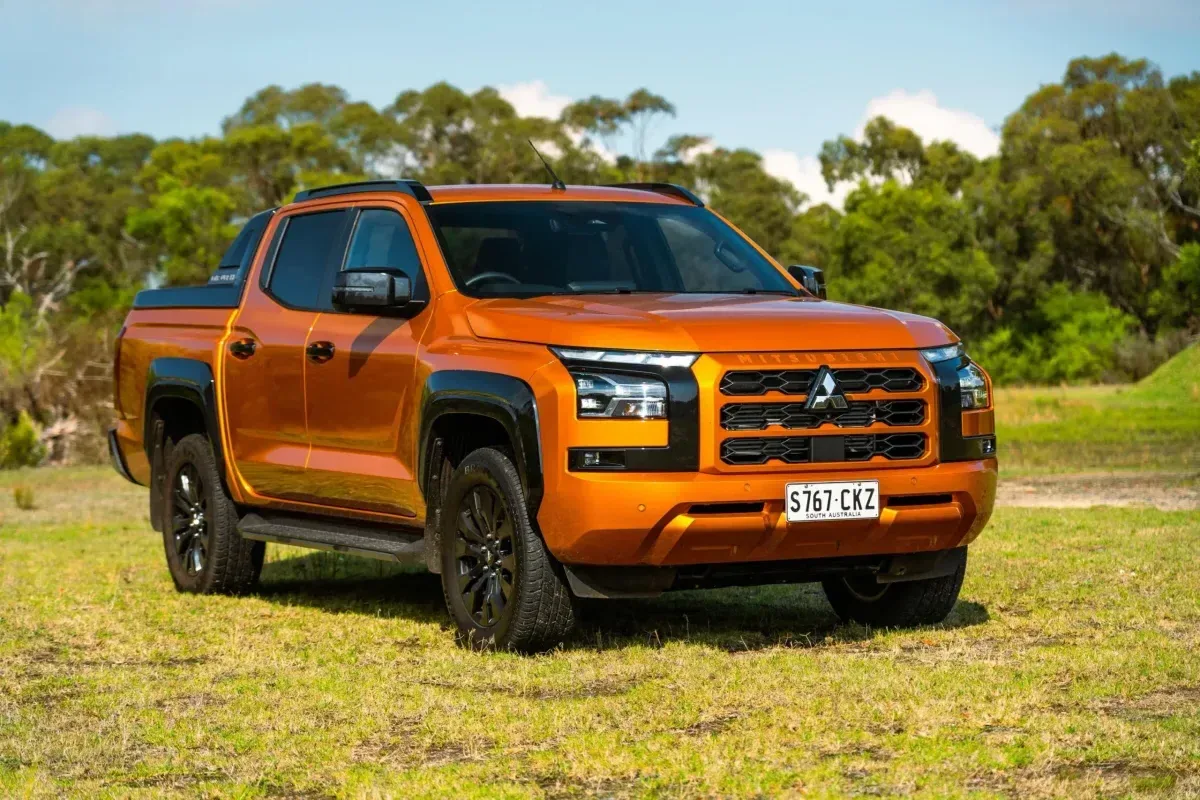
Price shown is each car's stored figure with its basis and check date.
See all Mitsubishi modelsHow the rest of the market lines up
We ran the same 1,165mm test across our data. Of the 32 ute models on sale, 28 have a between-arch width recorded on at least one row (125 rows in all). On 13 of those 28 models every recorded row clears 1,165mm, and the Ranger is one. On the other 15, none does, and the Triton is one. The remaining 58 on-sale ute rows have no between-arch width, mostly cab-chassis grades that leave the factory without a tub, so they aren't counted either way.
Payload: the Triton carries more
Fitting a pallet is half the job; the weight on it is the other half. On these rows the Triton GLX-R 4x4 has 1,093kg of payload, 99kg more than the Ranger XL 2.0 bi-turbo pick-up (994kg) and 162kg more than the Ranger XLT V6 (931kg). The Ranger PHEV XLT sits at 973kg. If your loads are heavy and fit on a Euro pallet, the Triton gives you more margin.
The body around the tray
| Dimension | Ranger XL 2.0 BT | Ranger XLT V6 | Ranger PHEV XLT | Triton GLX-R |
|---|---|---|---|---|
| Length (mm) | 5,370 | 5,370 | 5,367 | 5,320 |
| Width, body (mm) | 1,910 | 1,918 | 1,924 | 1,865 |
| Wheelbase (mm) | 3,270 | 3,270 | 3,270 | 3,130 |
| Ground clearance (mm) | 224 | 234 | 215 | 228 |
| Turning circle (m) | 12.9 | 12.9 | 12.9 | 12.4 |
| Kerb weight (kg) | 2,256 | 2,349 | 2,527 | 2,107 |
| Braked towing (kg) | 3,500 | 3,500 | 3,500 | 3,500 |
| Tow ball download (kg) | 350 | 350 | No data | 350 |
The Triton is 50mm shorter than the diesel Rangers, 45 to 59mm narrower, and its wheelbase is 140mm shorter, which goes some way to explaining its 0.5m tighter turning circle. Mitsubishi says its 12.4m is measured kerb to kerb; Ford's sheet doesn't say how its 12.9m was measured, so treat that gap as approximate. Both tow 3,500kg braked.
So which one?
- You move Australian pallets, or anything 1,165mm wide: the Ranger. It's the one whose floor takes it between the arches.
- Your loads are Euro pallets, boxes or heavy gear: the Triton takes a Euro pallet just as well, has a longer floor than the diesel Rangers here, and the GLX-R carries 99 to 162kg more than those Ranger rows.
- You want the longest floor: the Ranger PHEV XLT, at 1,605mm.
- You park in tight spots: the Triton is narrower and turns tighter.
Before you buy either for work, put the tape measure in the tub of the actual ute. Liners, sports bars and tie-down rails all eat into these numbers.
Compare them yourself
- Ford Ranger vs Mitsubishi Triton, side by side
- Load a pallet into either tray in the cargo planner
- Ford Ranger XL 4x4 Double Cab Pick-up 2.0 BT spec sheet
- Mitsubishi Triton GLX-R 4x4 spec sheet
Sources: CarSorted car rows 98, 101, 106 and 1766 (Ford Ranger) and 394 and 396 (Mitsubishi Triton), as at 8 October 2026. Tray figures match Ford Australia's 2026MY Ranger and Ranger PHEV specification sheets and Mitsubishi Motors Australia's 26MY Triton brochure. Pallet sizes: Australian standard pallet 1,165 x 1,165mm, Euro pallet 1,200 x 800mm. All dimensions are the manufacturers' published figures and individual vehicles vary.