BYD Atto 2 DM-i vs Its 5 Biggest Rivals
Written by Uzzi · 6 August 2026
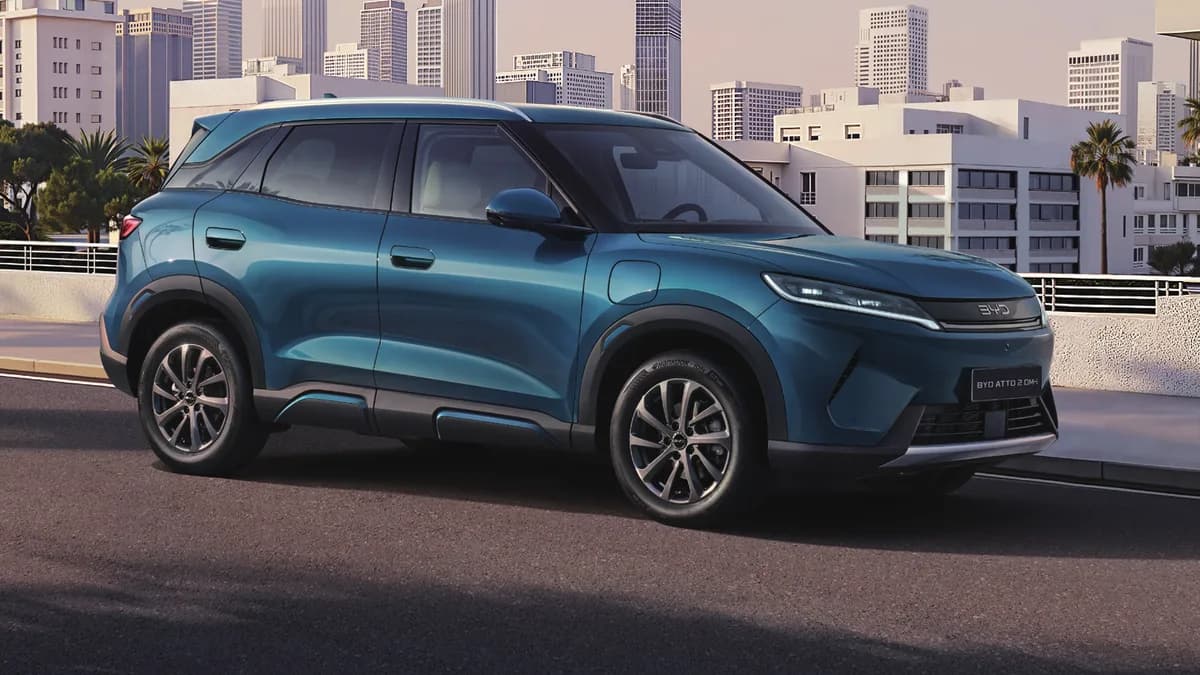
The BYD Atto 2 DM-i arrives into the most crowded, most aggressively priced corner of the Australian market. Small electrified SUVs between $28,000 and $35,000 are where Chinese brands have done the most damage to the incumbents, and where a new arrival has the least room to be average.
We have picked the five cars it will actually be cross-shopped against and compared them on the numbers that decide the purchase. To be upfront about two things: we have not driven the Atto 2 DM-i, because it is not in Australia yet, so nothing here is a driving verdict. And BYD has not confirmed its price, so every value judgement below is conditional on it landing where the range logic says it should.
We should also say plainly what the comparison shows, because it is not a clean sweep. The Atto 2 DM-i wins the thing it was designed to win and loses three separate arguments outright. Both halves are worth knowing before you put down a deposit.
The five rivals, and why these five
Two of these are plug-in hybrids that do the same job for similar money. Two are conventional hybrids that win on price and on having an actual safety rating. And one is the same car with the engine taken out, which is the comparison most Atto 2 DM-i buyers will genuinely agonise over.
- BYD Atto 2 (electric), $31,990. Same body, same badge, no engine.
- Chery Tiggo 7 Super Hybrid Urban, $34,990 drive-away. The most electric range near the money.
- BYD Sealion 5 DM-i Essential, $33,990. BYD's own cheapest plug-in, and a size bigger.
- MG ZS Excite Hybrid+, $30,990. Five-star ANCAP and a ten year warranty.
- GWM Haval Jolion Premium Hybrid, $29,990. The price floor, and the only one that tows properly.
| Plug-in hybrids | Price | Power | Electric range | Fuel use | Boot | ANCAP |
|---|---|---|---|---|---|---|
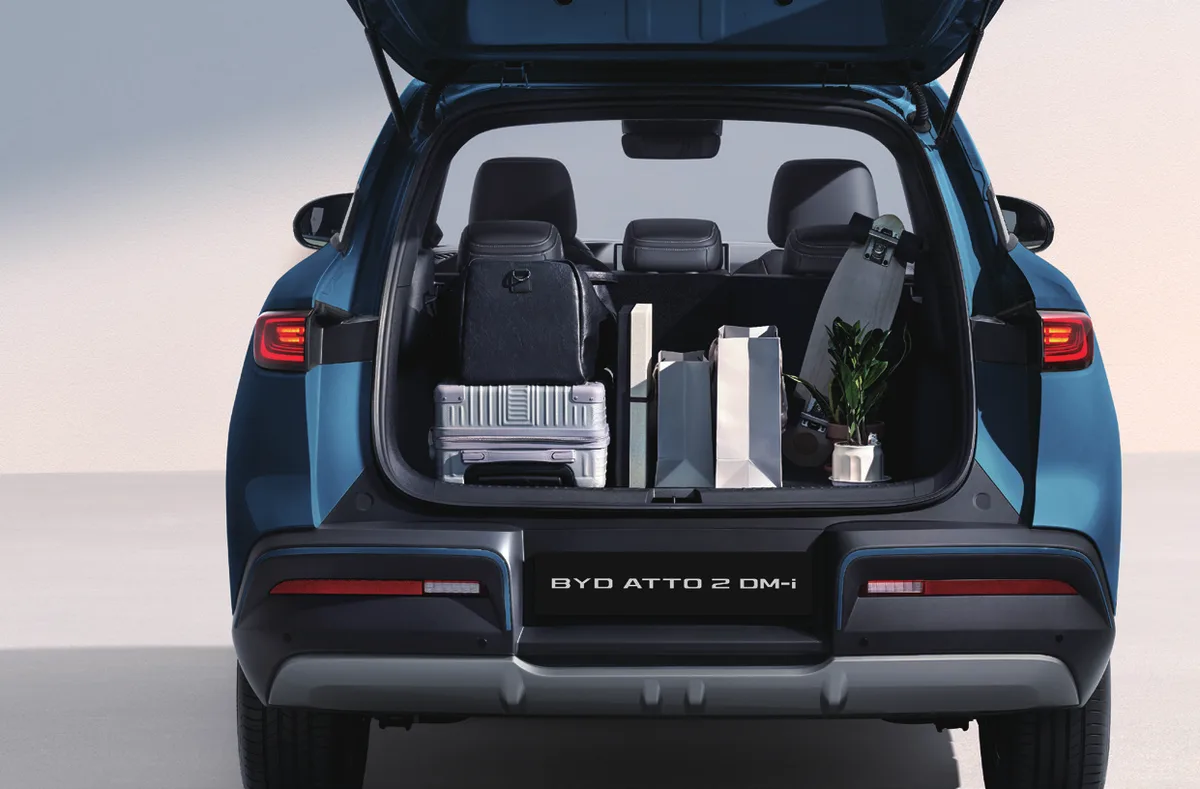
| Atto 2 DM-i Boost | Not announced | 156kW | 90km | 5.1L/100km | 425L | None |
| Chery Tiggo 7 Super Hybrid | $34,990 d/a | 180kW | 93km | 1.4L/100km* | 475L | None |
| BYD Sealion 5 Essential | $33,990 | 156kW | 71km | 1.2L/100km* | 463L | None |
| Hybrids and electric | ||||||
| BYD Atto 2 (electric) | $31,990 | 130kW | 345km | No petrol | 380L | None |
| MG ZS Excite Hybrid+ | $30,990 | 158kW | No plug | 4.7L/100km | 443L | 5 (2025) |
| Haval Jolion Premium Hybrid | $29,990 | 140kW | No plug | 4.8L/100km | 255L | 5 (2022) |
* The Chery and Sealion 5 figures are utility-factor weighted numbers, which assume you start most trips with a charged battery. They are not comparable to the Atto 2 DM-i's 5.1L/100km, which is what BYD says it uses with the battery empty. See the section below.
Read that fuel column carefully, because it is not comparing like with like
This is the single most misleading table in the small SUV market and it is worth slowing down on. The Chery's 1.4L/100km and the Sealion 5's 1.2L/100km are weighted figures. They are calculated on the assumption that you plug in regularly, so most of the test distance runs on electricity and the petrol number collapses to something that looks impossible. They are not lies, they are just answering a different question.
BYD has not published a weighted figure for the Atto 2 DM-i. The row is printed as TBC on its own specification sheet. What BYD has published is 5.1L/100km combined, which is the charge-sustaining number, meaning what it drinks once the battery is flat and it is working as an ordinary hybrid.
So the honest comparison is this. With a charged battery, all three plug-ins use close to nothing. With a flat battery, all three land somewhere near 5 to 6L/100km, and the Atto 2 DM-i is the only one telling you so on the brochure. If you cannot plug in at home, every plug-in hybrid here is a heavy conventional hybrid, and the MG ZS Hybrid+ at 4.7L/100km will genuinely beat all of them while costing less to buy.
Where the Atto 2 DM-i wins
Electric range for the size and the money. Ninety kilometres of WLTP electric range in a 4,330mm small SUV is the headline, and 150km in pure city driving is the number that actually matters for a commuter. The Chery gets 93km but needs an 18.4kWh battery in a 4,535mm mid-size body to do it. The Sealion 5 Essential, from the same brand, manages 71km. If your daily driving is under about 80km, the Boost is a de facto electric car that happens to have a petrol tank for holidays.
It is the right size. The Tiggo 7 and Sealion 5 are both mid-size SUVs pretending to be affordable. At 4,330mm the Atto 2 DM-i is a genuinely small car with a 10.6 metre turning circle, which is the difference between fitting in an inner-city car park and not. The Sealion 5 needs 12 metres to turn around.
The standard safety list. Adaptive cruise, autonomous emergency braking, blind spot detection, rear cross traffic alert and brake, emergency lane keeping, driver monitoring and traffic sign recognition are all standard on the base Active, not held back for the expensive one. That is a better list than most cars at this price hold, and the only meaningful omission on the Active is the 360-degree camera.
Range between stops. 1,000km combined on the Boost. The electric Atto 2 does 345km and then needs 30 minutes minimum. If the reason you have not bought an EV is the one trip a year to see family interstate, this is the car that removes the objection.
Where it loses, and these are not small things
It has no ANCAP rating, and two rivals do. Neither ANCAP nor Euro NCAP has tested the Atto 2 in any form. The MG ZS Hybrid+ holds five stars from 2025 testing, which is the current and hardest criteria. The Haval Jolion holds five stars from 2022. A long list of driver aids is not the same as a tested structure, and if a rating is a requirement for your workplace, your insurer or your own peace of mind, this car cannot satisfy it today.
There is no DC fast charging. Type 2 AC only, at 3.3kW on the Active and 6.6kW on the Boost, which is about three hours from 15 to 100 percent. Every public fast charger in the country is useless to it. The Chery Tiggo 7 Super Hybrid does support DC charging, which means it can grab electric range on the road in a way the BYD simply cannot. If you cannot charge where you sleep, the Atto 2 DM-i is the wrong car and this is why.
Towing is nearly nonexistent. 750kg braked. The Haval Jolion Hybrid does 1,300kg for less money. A camper trailer, a small boat or a box trailer with a bike rack are all beyond it, and if you need that the answer in BYD's own range is the Sealion 6 at 1,500kg.
The warranty is the shortest here. BYD covers six years or 150,000km. Chery and GWM offer seven. MG offers ten years or 250,000km. On a car full of new technology from a brand still building its long-term record in Australia, four extra years of cover is worth real money.
So which one should you actually buy?
Buy the Atto 2 DM-i if you can charge at home, you want a genuinely small car, and you want to stop buying petrol without losing the ability to drive interstate on a whim. Assuming it lands under $30,000 it will be the cheapest way in Australia to get 90km of electric range, and nothing else in this group combines that range with this footprint.
Buy the electric Atto 2 if you can charge at home and you almost never drive more than 300km in a day. It is available now, it is $31,990, it has no engine to service, and the DM-i's petrol half is complexity you would be paying for and rarely using. This is the comparison most people reading this should take seriously.
Buy the MG ZS Hybrid+ if you cannot charge at home. It is cheaper, it uses 4.7L/100km without any plug at all, it holds a current five-star ANCAP rating, and the ten year warranty is the best in the class by a wide margin. For apartment dwellers and street parkers this is the sensible answer and it is not close.
Buy the Chery Tiggo 7 Super Hybrid if you want maximum electric range and a bigger car, and you are willing to accept a bigger footprint to get it. It has the most power here, 93km of electric range, the biggest boot, and unlike the BYD it can DC fast charge.
Buy the Haval Jolion Hybrid if price and towing are what decide it. It is the cheapest here and the only one that will pull 1,300kg. The 255 litre boot is the compromise and it is a significant one.
Buy the Sealion 5 DM-i if you need mid-size space and want a plug-in from BYD today rather than waiting. You give up 19km of electric range against the Atto 2 DM-i Boost and gain a considerably bigger back seat.
The bottom line
The Atto 2 DM-i looks like the most convincing small plug-in hybrid Australia has been offered, on the specific condition that you have somewhere to plug it in. It does not sweep the field. It has no crash rating, it cannot fast charge, it barely tows and it carries the shortest warranty of the six. What it does have is 90km of electric range in a small, easy-to-park body with a genuinely complete standard safety list, and if BYD prices it where its own range logic demands, nothing else will do that combination for the money.
We will update this comparison when BYD Australia confirms local specification and pricing, and again if ANCAP publishes a result. For the full specification breakdown, read our Atto 2 DM-i guide, or compare any two of these cars directly in our comparison tool.
Compare these picks side by side
Stack 6 of them on 200+ specs, price, safety and running cost in one view.
Compare all 6 nowFrequently Asked Questions
Is the BYD Atto 2 DM-i better than the electric Atto 2?
What is the cheapest plug-in hybrid SUV in Australia?
Does the Atto 2 DM-i have more electric range than its rivals?
Which of these has the best safety rating?
Which has the longest warranty?
Can I tow with any of these?
New cars, real prices, straight to your inbox
Join the CarSorted mailing list for new-model launches, price drops and drive-away deals, honest reviews, and founding-member pricing on the upcoming CarSorted Pro Report.
- New-model launches
- Price drops & deals
- Honest reviews
No spam, unsubscribe anytime. By subscribing you agree to receive marketing emails.
Disclaimer: All information in this article was believed to be correct at the time of publishing (6 August 2026). Prices are manufacturer recommended retail prices (RRP) and may vary by state, dealer, and options. Specifications, government incentives, and rebates can change without notice. Always verify details with the manufacturer or relevant authority before making a purchase decision. Running cost estimates are based on average Australian driving conditions at 15,000 km/year. CarSorted does not accept payment for recommendations or rankings.
Written by Uzzi, CarSorted Editorial Team · 6 August 2026 · how we research
Comments (0)
Sign in to join the conversation
No comments yet. Be the first!