CarSorted Verdict:
- Mild hybrid: a 12 V or 48 V battery and a starter-generator that helps the engine. Generally it can't move the car on electricity; a few 48 V systems can creep a short way at parking speeds.
- Full (self-charging) hybrid: a high-voltage battery of roughly 1 to 2 kWh and a motor that can drive the wheels alone at low speed.
- Neither plugs in: both batteries are filled by the engine and by braking. "Self-charging" is a name, not energy from nowhere.
- Fuel: on our rows, full hybrids use less fuel in town than on the open road on 95 of 153 grades. Mild hybrids almost never do.
- Battery warranty: up to 10 years at Toyota (with annual checks), 7 years or 150,000 km at MG, often 8 years elsewhere.
- Read the spec sheet, not the badge: plenty of cars badged "Hybrid" are mild hybrids.
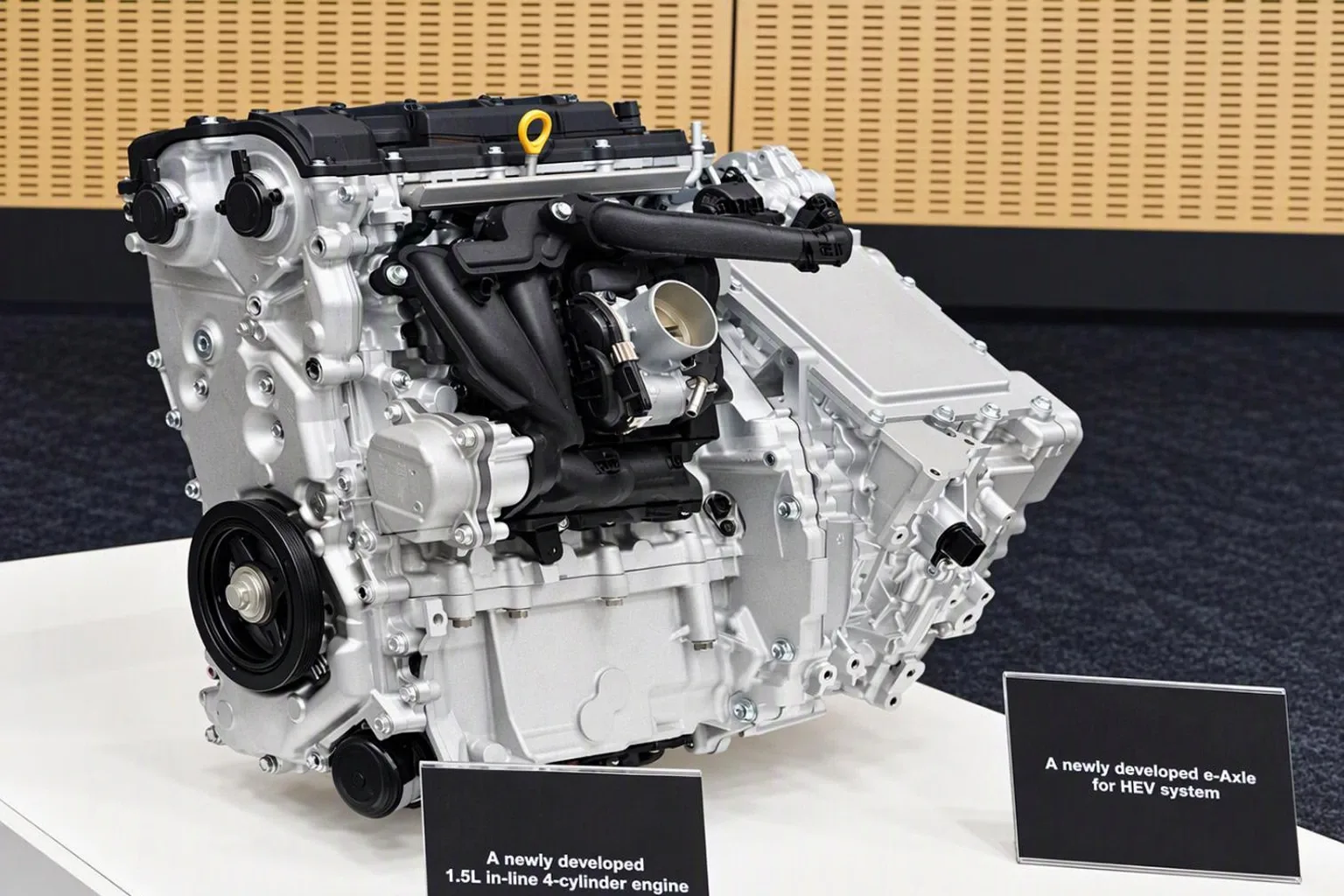
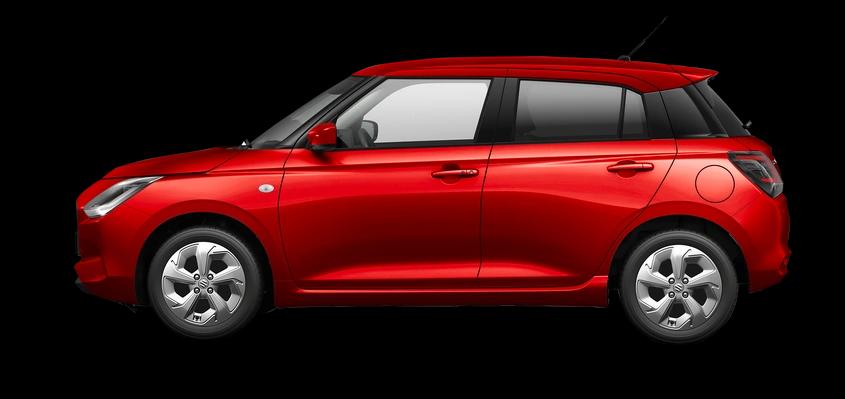
Walk into almost any showroom now and something will be called a hybrid. A Suzuki Swift says Hybrid. So does a Toyota Corolla. So does a Peugeot 2008, a Mazda CX-60 and a Range Rover. They are not the same thing, and the difference lives almost entirely in one component: the battery.
This guide is about that battery. What voltage it runs at, what it's made of, how much energy it holds, what it lets the car do, how it gets charged without a plug, what it does to your fuel bill, how long it's covered for in Australia, and how to tell from a badge or a spec sheet which kind you're actually buying. The fuel figures come from the official numbers on our own rows, and every battery spec for a named car comes from that manufacturer's Australian website.
Three kinds of hybrid, and how many are on sale
Strip away the marketing and there are three families of petrol-electric car you can buy new here:
- Mild hybrids (MHEV). A small electric motor-generator, usually where the alternator would be or between engine and gearbox, fed by a 12-volt or 48-volt battery. It helps; it doesn't drive the car on its own.
- Full hybrids (HEV), sold as "self-charging" hybrids. A proper traction motor and a high-voltage battery. The car can move on electricity alone at low speeds and switches the engine on and off constantly.
- Plug-in hybrids (PHEV). A full hybrid with a much bigger battery you charge from the wall, good for tens of kilometres on electricity. They get a short section near the end and their own PHEV explainer.
The first two are roughly level in number. On 17 November 2026 we listed 173 mild hybrid grades across 59 model lines from 16 makes, and 176 full hybrid grades across 57 model lines from 15 makes. Who builds them is very different, though. Mild hybrids are dominated by European and premium brands: Land Rover, Mercedes-Benz, Mazda and Audi account for most of them. Full hybrids are led by Toyota, then Hyundai, Lexus and Kia.
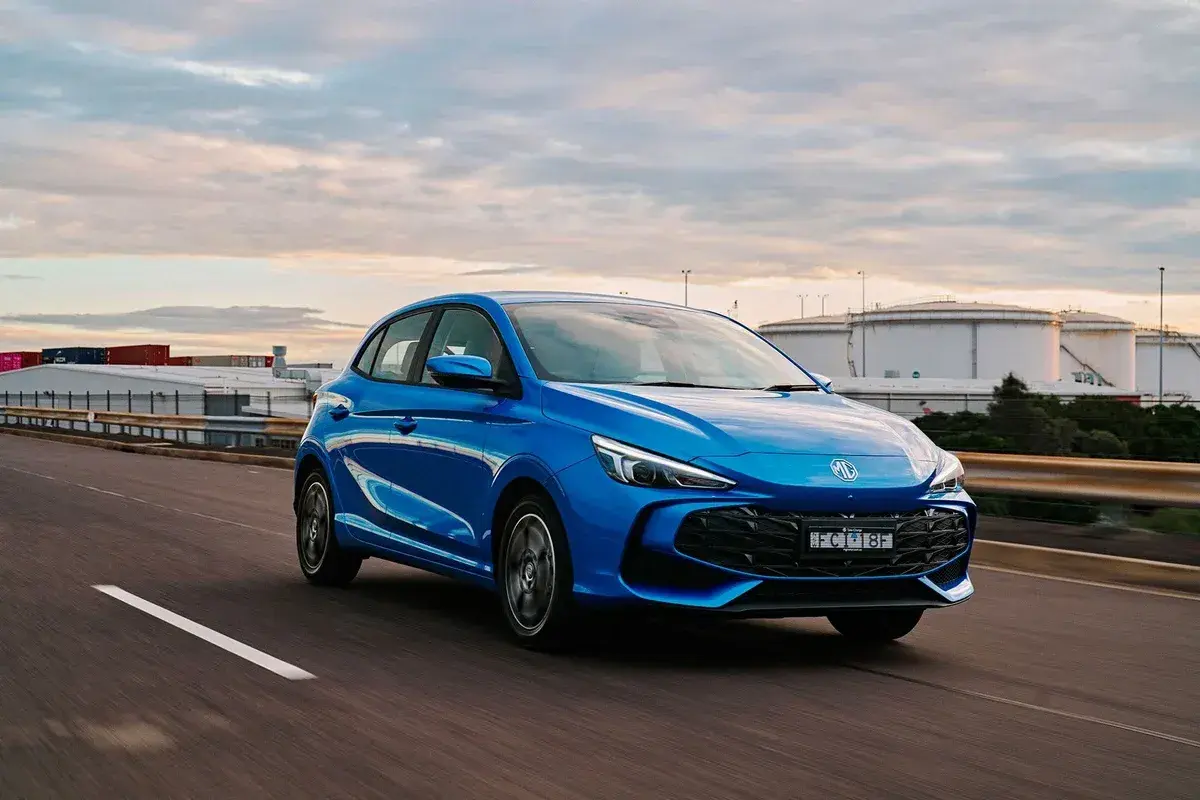
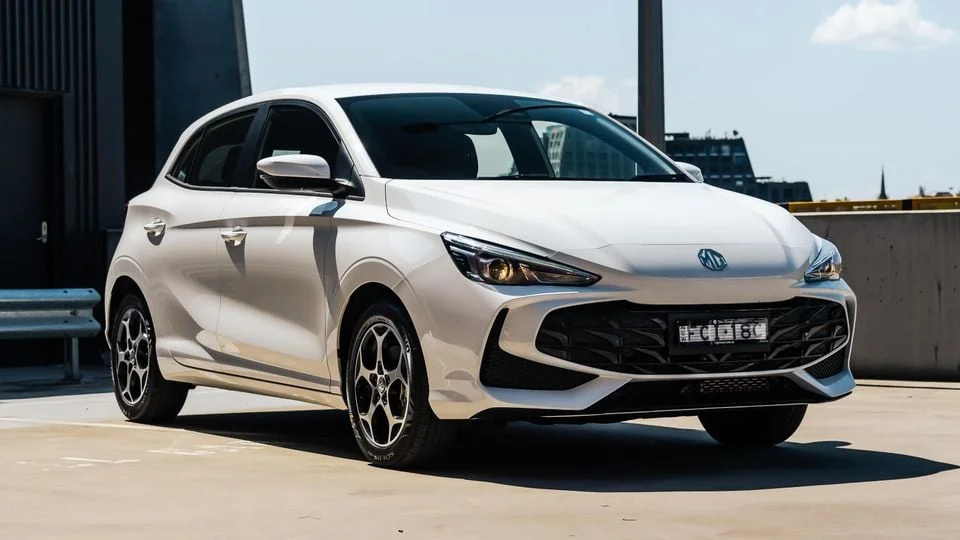
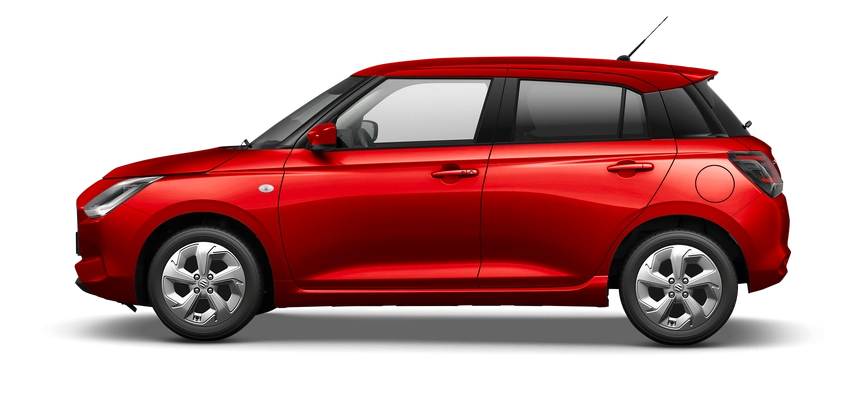
At the cheap end, the cheapest mild hybrid we list is the Suzuki Swift Hybrid, which Suzuki sells at drive-away prices, and among the cheapest full hybrids are the MG3 Hybrid+ (MG also sells it drive-away) and the Toyota Yaris Ascent Sport at $28,990 RRP. Prices are quoted on different bases (drive-away against RRP plus on-road costs), so click through to each car page for the current price and its basis.
Voltage: 12 V, 48 V and a few hundred volts
Voltage is the simplest way to sort them, because it decides how much power the electric side can move. Power is voltage times current, and current is limited by how thick the cables and how hot the parts can get. At 12 volts you can only push a few kilowatts before the wiring becomes absurd. At 48 volts you get roughly four times the power through the same current, enough for a meaningful boost. At a few hundred volts you can run a motor strong enough to drive the car.
Suzuki describes the Swift Hybrid's system as a "self-charging electric motor and 12V lithium-ion battery". Toyota's V-Active option on the HiLux is, in Toyota's words, "a 48-volt motor-generator system that assists engine performance and regenerates through deceleration". Mazda's six-cylinder CX-60, CX-70, CX-80 and CX-90 use its 48V M Hybrid Boost. For comparison, Mazda quotes 355 volts for the battery in the plug-in hybrid CX-60.
The 48-volt figure isn't arbitrary. International vehicle electrical-safety rules treat a direct-current system above 60 volts as high voltage, with orange cabling, extra insulation, shut-off devices and specialist training for anyone working on it. A 48-volt system sits under that line, which keeps it cheap to add to an existing engine. Full hybrids sit well above it: their traction batteries usually run at roughly 200 to 300-plus volts, and many systems step that up further for the motors. That's why a hybrid's high-voltage parts are a job for a trained technician, not a weekend.
The three battery systems side by side,
general engineering, with manufacturer figures where named
| 12 V mild hybrid | 48 V mild hybrid | Full (self-charging) hybrid | |
|---|---|---|---|
| Battery voltage | 12 V | 48 V | A few hundred volts |
| Usual chemistry | Lithium-ion (Suzuki Swift Hybrid); plain start-stop cars use lead-acid AGM or EFB | Lithium-ion | Lithium-ion or nickel-metal hydride |
| Energy stored | A small fraction of a kWh | Under 1 kWh (Mazda: 0.33 kWh) | Roughly 1 to 2 kWh, some smaller (MG3 Hybrid+: 1.83 kWh) |
| Start-stop and smooth restarts | Yes | Yes | Yes |
| Torque assist | A little | Noticeable | Large |
| Regenerative braking | Small | Moderate | Substantial |
| Drives on electricity alone | No | Mostly no; a few creep briefly at parking speeds | Yes, short low-speed stretches |
| Plug in to charge | No | No | No |
Ranges describe the technology in general; the named figures are each manufacturer's own, from its Australian website on 17 November 2026. A plug-in hybrid has a high-voltage system like a full hybrid's but a battery many times bigger.
Compare these picks side by side
6 of them on 200+ specs, price, safety and running cost in one view.
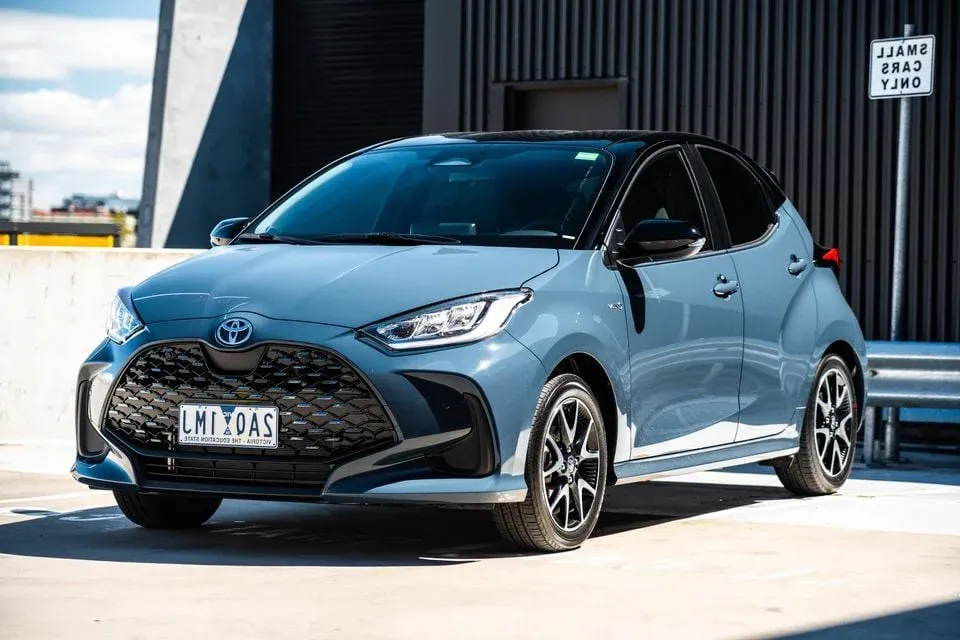
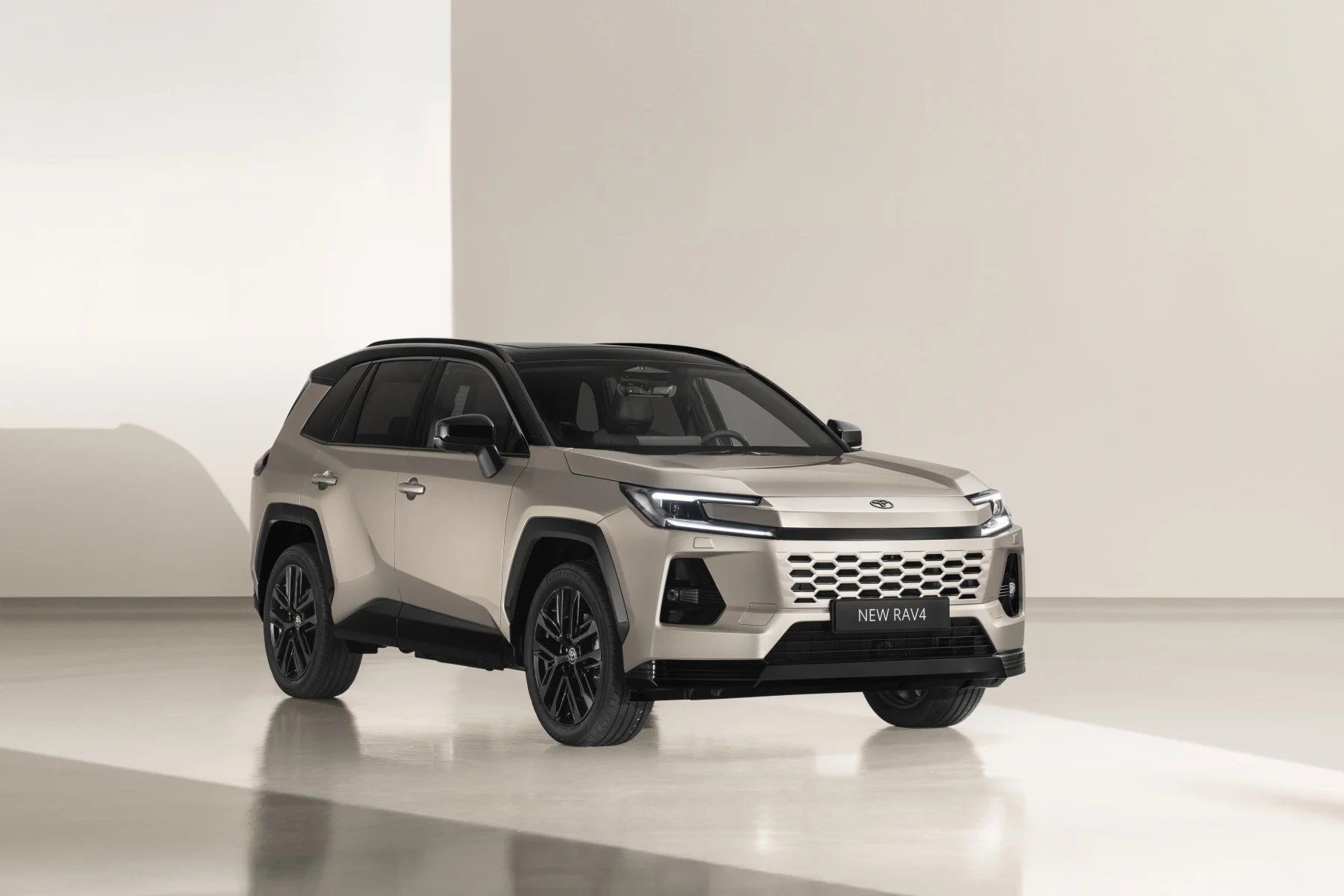
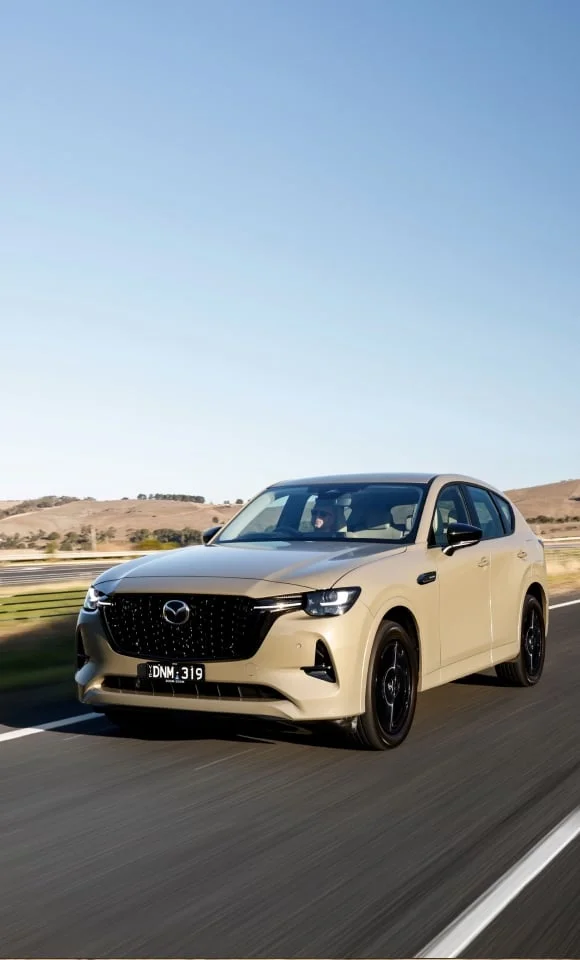
Each price is that car's stored figure with its basis and check date. Driva is an independent finance provider, not part of CarSorted. We aren't paid for this link.
Chemistry: lead-acid, lithium-ion and nickel-metal hydride
Three chemistries turn up in this corner of the market, and each was picked for a reason.
- Lead-acid (AGM or EFB). The ordinary car battery, upgraded. Absorbent glass mat and enhanced flooded batteries tolerate the constant restarts of a start-stop system better than a basic one. Cheap and heavy, and they don't like taking a big charge quickly, which limits how much braking energy they can absorb. You'll find them in plain start-stop cars rather than proper mild hybrids.
- Lithium-ion. Lighter, accepts charge quickly and handles frequent shallow cycles well, which is exactly what a hybrid asks of it. It's the norm for 48-volt systems, Suzuki uses it for the Swift's 12-volt hybrid battery, and many newer full hybrids use it too.
- Nickel-metal hydride (NiMH). The chemistry the early mass-market hybrids were built on. Heavier than lithium-ion for the same energy but famously tough and tolerant of heat, and still used in some current full hybrids.
Few buyers need to care which one is fitted. What matters is the warranty and how the car's software treats the battery, and a full hybrid works its battery inside a narrow middle band of charge rather than running it flat and filling it to the brim. Small, frequent, shallow cycles are a gentle life for a battery, which is a big part of why hybrid packs tend to last.
One thing all of them share: a separate ordinary 12-volt battery still runs the lights, locks and computers in a full hybrid, and it is covered separately. Toyota's warranty terms exclude the "Auxiliary Battery (12 volt)" from traction battery cover, and MG covers the original 12-volt battery for 24 months. If a hybrid won't "start", the little battery is the usual suspect, not the big one.
How much energy the battery holds
This is where the gap really opens up. Mazda puts it plainly: its CX-60 plug-in hybrid uses a 17.8 kWh battery, "whereas the mild-hybrid system's battery is just 0.33kWh". A full hybrid sits in between. MG quotes a 1.83 kWh battery for the MG3 Hybrid+, and across the full-hybrid grades on our rows that record a battery size, the figures run from 1.0 to 1.9 kWh. Plug-in hybrids on sale here have a median battery of roughly 24 kWh on our rows.
To put those numbers on the road: a small car cruising gently uses something like 10 to 15 kWh of energy per 100 km at the wheels. A third of a kilowatt-hour would be gone in two or three kilometres even if the motor could drain it completely, which it can't. A full hybrid's one to two kilowatt-hours sounds like more, but the car only uses a slice in the middle of the battery, typically well under a kilowatt-hour, and that slice is a few kilometres of gentle suburban creeping before the engine steps back in. That's why a full hybrid's electric driving comes in short stretches, and why a mild hybrid's battery is really a buffer for the next restart or overtaking boost, not a fuel tank.
What each battery lets the car do
Stop-start, done smoothly
Hybrids of both kinds switch the engine off when you stop. A mild hybrid's starter-generator spins it back up through the belt or directly at the crankshaft, which is quicker and quieter than a conventional starter motor shoving a pinion into the flywheel. It's the mild hybrid benefit you'll notice day to day.
Torque assist
Electric motors make their strongest pull from zero revs, exactly where a turbo engine is weakest. A 48-volt system fills that gap when you pull away or tip into the throttle. A full hybrid's motor goes much further: the MG3 Hybrid+'s is a 100 kW motor by MG's figure, more than the whole 81kW engine of the petrol MG3 Excite.
Regenerative braking
Lift off or brake and the motor runs as a generator, turning momentum into charge instead of brake-pad heat. How much a car can recover depends on how big the motor is and how fast the battery can soak up charge. A 12-volt system captures a sliver; a 48-volt system more; a full hybrid can handle much of a gentle stop on regeneration, with the friction brakes blended in at the end.
Coasting with the engine off
Some 48-volt systems can shut the engine down while you coast at speed and restart it the instant you need it, because the starter-generator makes restarts seamless. Full hybrids do this as a matter of course.
Driving on electricity alone
This is the dividing line. Toyota says small trips under 50 km/h in its full hybrids "might not use any petrol", depending on how you drive, and offer an EV Mode that keeps the engine off unless it's needed. MG says the MG3's full hybrid system enables electric driving at lower speeds. Most mild hybrids can't do this at all, and Mazda says its 48-volt system can't be used for electric-only driving; a few 48-volt designs with the motor inside the gearbox can creep a short way at low speed, but nothing like a full hybrid.
Ways to buy
Quotes on 4 cars; the comparison covers 6.
Compare 6Manufacturer offer
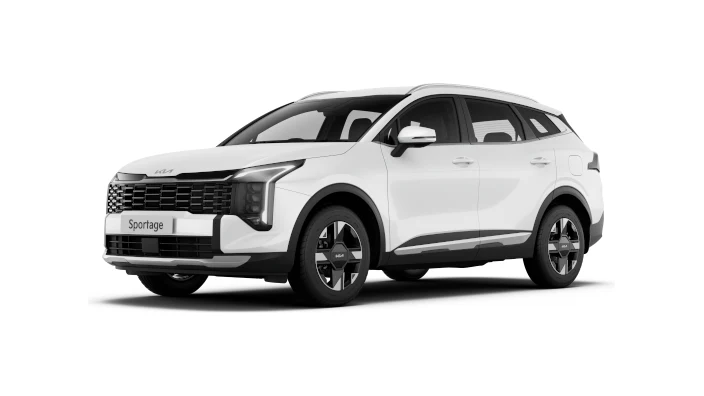
Ends 30 Nov 2026
Manufacturer's terms: Drive away price valid in November 2026 at participating Kia dealers only. Includes 12 months’ registration, CTP insurance estimate (private buyer with a good driving record), stamp duty, applicable statutory and dealer delivery charges.
Offer from Kia Australia, checked 15 Nov 2026
T&Cs apply, as the manufacturer prints them. Eligibility, stock and build limits vary, so confirm the offer with the dealer.
Finance
From ≈$101/wk(≈$437/mo)
Estimate on the Suzuki Swift at $26,800 estimated RRP, before on-road costs; assumes $5,000 deposit, 5 yrs at 7.5% p.a. Not a quote or an offer of credit.
Compare real car-loan ratesDriva is an independent finance provider, not part of CarSorted. We aren't paid for this link.
Novated lease
Paid from pre-tax salary with the running costs inside the lease. What it comes to depends on your salary and the term.
Novated lease quoteWork out a lease on the MG MG3Driva is an independent finance provider, not part of CarSorted. We aren't paid for this link. Opens apply.driva.com.au in a new tab.
Why a mild hybrid can't really drive on electricity
It isn't a software lock. Three things stand in the way. The motor is small, sized to help the engine rather than replace it. The battery holds too little energy to move a tonne-plus car anywhere useful. And in the common designs the motor is tied to the engine by a belt or sits on the crankshaft, so it can't turn the wheels without also turning a stopped engine and its pistons, which wastes much of the effort.
Manufacturers say as much themselves. Peugeot's Australian FAQ says its hybrids are mild hybrids that "use a small electric motor to assist the petrol engine and do not require charging", and contrasts them with plug-in hybrids that can drive on electric power alone. So a car with "Hybrid" on the boot may be a mild hybrid; what it can do on electricity depends on the system, not the badge.
Our take: if the appeal of a hybrid for you is gliding silently out of the driveway or through a car park, only a full hybrid or a plug-in will do it. A mild hybrid is a better petrol or diesel car, not a part-electric one.
How "self-charging" really works
"Self-charging" sounds like the car makes electricity out of nothing. It doesn't. A full hybrid's battery is filled two ways: by the engine, which can drive a generator whenever there's spare capacity (usually at moments when the engine is running efficiently anyway), and by regenerative braking, which recovers energy you would otherwise throw away as heat in the brakes.
Both trace back to the fuel tank. Even the braking energy came from fuel first: it's the momentum the engine gave the car. What a hybrid does is waste less of it, and let the engine run more of the time at the speed and load where it's most efficient. Toyota's own description is that its hybrids self-charge by recovering energy from the petrol engine and through regenerative braking, and that there's no need to plug in.
A mild hybrid works the same way on a smaller scale: regeneration on the overrun and charging from the engine. The difference is how much energy is moved through the battery and what it's spent on.
Cars in this story
6 cars
Price shown is each car's stored figure with its basis and check date.
See all Toyota modelsWhat it does to fuel use: our numbers
Comparing the two types across the whole market is tricky because they aren't sold in the same kinds of car. Mild hybrids skew heavily to big, powerful European SUVs and large engines, and 60 of the mild hybrid grades we list are diesels. Full hybrids are mostly small and mid-size petrol cars and SUVs. A raw comparison mostly measures that mix, so here are the official combined figures from our rows, split by body type, with the like-with-like line in bold.
Fuel use by hybrid type,
median official combined figure, on-sale grades on our rows, 17 Nov 2026
| Group | Grades | Median combined |
|---|---|---|
| Mild hybrid (MHEV) | ||
| Whole group | 166 | 7.5 L/100km |
| SUVs | 121 | 7.6 L/100km |
| Non-diesel SUVs priced under $60,000 | 13 | 5.5 L/100km |
| Sedans | 15 | 7.1 L/100km |
| Hatchbacks | 5 | 4.0 L/100km |
| Full hybrid (HEV) | ||
| Whole group | 176 | 5.25 L/100km |
| SUVs | 131 | 5.2 L/100km |
| Non-diesel SUVs priced under $60,000 | 77 | 4.9 L/100km |
| Sedans | 12 | 4.0 L/100km |
| Hatchbacks | 10 | 4.0 L/100km |
Official combined figures (ADR 81/02 lab test) as stored on our rows; grades without a figure are left out. "Priced under $60,000" uses the price on each row. Medians, so one V8 doesn't drag a group.
In the closest like-with-like group, petrol and petrol-hybrid SUVs under $60,000, full hybrids come out about 0.6 L/100km lower on the median. The hatchback line is the surprise: the median is the same for both, because the mild hybrid hatch pool is mostly the Suzuki Swift Hybrid at 4 L/100km, a very light car, against full hybrids such as the Toyota Yaris at 3.5 L/100km and the MG3 Hybrid+ at 4.3 L/100km. Weight and size still matter more than the badge.
Where the difference really shows: town against highway
The combined figure hides the most telling pattern in our data. The official test also reports an urban figure (stop-start city driving) and an extra-urban figure (steady open-road driving). For a normal petrol or diesel car, town is always thirstier: on our rows, not one of 598 non-hybrid grades with both figures uses less fuel in town. Mild hybrids are almost the same, with just 4 of 104 grades lower in town. Full hybrids flip it: 95 of 153 use less fuel in the urban test than on the open road.
That's the battery at work. In traffic a full hybrid spends long stretches with the engine off, creeps on electricity and recovers most of its braking energy. On the highway at a steady 100 km/h there's little braking to recover and the engine does nearly all the work, so the advantage shrinks. The medians tell the same story: mild hybrids 9.5 L/100km urban and 6.25 extra-urban; full hybrids 4.4 and 5.5. A same-model example: the Kia Sportage S FWD Petrol is rated at 11 L/100km urban, the Sportage S HEV FWD at 4.8 L/100km.
Weekly fuel cost at a glance
Put in your own kilometres and see what a petrol, a mild hybrid and a full hybrid cost to fuel each week. The calculator uses each car's official combined figure.
- Kia Sportage S FWD Petrol
$1,656 a year, rated 11 L/100km urban, 6.5 extra-urban, 8.1 combined (ADR 81/02)
$32 a week
- Kia Sportage S HEV FWD
$986 a year, rated 4.8 L/100km urban, 4.9 extra-urban, 4.9 combined (ADR 81/02)
$19 a week
- Hyundai Kona 2.0 FWD
$1,338 a year, rated 6.6 L/100km combined (ADR 81/02)
$26 a week
- Hyundai Kona Hybrid FWD
$798 a year, rated 4 L/100km urban, 3.9 extra-urban, 3.9 combined (ADR 81/02)
$15 a week
Lowest - Suzuki Swift Hybrid Plus
$870 a year, rated 4.3 L/100km urban, 3.8 extra-urban, 4 combined (ADR 81/02)
$17 a week
- Peugeot 2008 Allure Hybrid
$903 a year, rated 4.7 L/100km urban, 3.8 extra-urban, 4.4 combined (ADR 81/02)
$17 a week
Assumes 20 km each way, 10 trips a week, mild weather and the official combined road mix; unleaded at $1.95/L, premium unleaded at $2.10/L. Plug-in hybrids are costed with the battery not charged. Fuel only.
The price premium
You rarely get to choose a mild hybrid as an option: on many cars that have one, it comes with the engine, and the cost is buried in the price. Full hybrids are different. Plenty of models are sold with a plain petrol engine and a hybrid side by side, so you can see what the battery and motor cost you and what they save.
Same car, petrol or full hybrid,
live from our rows
| Grade | Combined | Urban | Price |
|---|---|---|---|
| Petrol | |||
| Kia Sportage S FWD Petrol | 8.1 L/100km | 11 L/100km | $38,490 RRP |
| Hyundai Kona 2.0 FWD | 6.6 L/100km | no data | $33,950 RRP |
| Full hybrid | |||
| Kia Sportage S HEV FWD | 4.9 L/100km | 4.8 L/100km | $44,450 RRP |
| Hyundai Kona Hybrid FWD | 3.9 L/100km | 4 L/100km | $36,950 RRP |
Prices and figures render from each grade's row; hover a figure for its as-at date. Urban is the official city-cycle figure; "No data" means we don't hold it.
Whether the hybrid pays for itself comes down to how far you drive and where. Divide the price gap by the weekly fuel saving from the calculator above and you have the payback time. Lots of city kilometres shortens it a lot; a mostly-highway driver doing modest distances may not get there on fuel alone, though resale and the smoother drive count for something. Our EV vs hybrid running-cost comparison goes deeper on total running costs.
CarSorted
Shortlisting already?
Compare any two side by side or see this month's manufacturer deals. Figures come from manufacturers' own published documents.
Battery warranty in Australia
A full hybrid's battery normally gets its own warranty, separate from the car's, and the terms differ a lot. Toyota's is the best known. It offers "up to 10 years of HEV, PHEV, BEV and 48V traction battery cover" with unlimited kilometres: the standard five-year warranty, extended a year at a time for up to five more years each time the car passes an annual battery health check, with routine logbook servicing at Toyota. Cars used commercially (taxis, hire cars, rideshare and the like) are excluded from the extension. Note the 48V: Toyota's cover includes its mild hybrid batteries too, such as the HiLux V-Active's.
If you're buying a used Toyota hybrid, the date matters. Toyota says hybrids bought before 1 January 2019 have eight years or 160,000 km of battery cover from first delivery; the up-to-10-year terms apply to those bought after.
MG covers the high-voltage battery in its electric and hybrid cars for 7 years or 150,000 km, whichever comes first, and treats a capacity drop below 70% found at an MG capacity check as excessive loss. That matches MG's standard seven-year, unlimited-kilometre car warranty in years but is capped at 150,000 km, and it is shorter than the up-to-10-year cover MG offers on the car itself when it is serviced with MG.
Hybrid battery warranty against the car's warranty,
live from our rows
| Grade | Battery warranty | New-car warranty |
|---|---|---|
| Full hybrid | ||
| Toyota RAV4 GX Hybrid 2WD | 10 years | 5yr / unlimited km |
| Hyundai Kona Hybrid FWD | 8 years | 5yr / unlimited km |
| Kia Sportage S HEV FWD | 7 years | 7yr / unlimited km |
| MG3 Excite Hybrid+ | 7 years | 10yr / 250,000 km |
| Honda Civic e:HEV LX | 8 years | 5yr / unlimited km |
| Subaru Forester AWD Hybrid | 8 years | 5yr / unlimited km |
| Mild hybrid | ||
| Toyota HiLux SR 4x4 Double Cab Pick-Up Auto V-Active | 10 years | 5yr / unlimited km |
| Suzuki Swift Hybrid Plus | no data | 5yr / unlimited km |
Years only; distance limits and conditions (annual checks, servicing, private use) vary by brand, so read the terms on each car page and the manufacturer's site. "No data" means we hold no separate battery figure, not that the battery is uncovered: it then falls under the car's own warranty terms.
Across the full hybrids we list, 155 of 176 grades have a battery warranty on our rows, and where we hold both figures the battery cover is longer than the car's on 126 of 153. Mild hybrid batteries less often get a separate headline warranty; Toyota's, which includes 48-volt batteries, is one.
Battery life and replacement
Toyota's own answer to "how long does a hybrid battery last?" is that it varies with usage and environmental factors, and that's the honest one. The warranty is the clearest written promise you get: up to 10 years with unlimited kilometres at Toyota, on its conditions.
Several things work in a hybrid battery's favour. It isn't run flat or kept fully charged, because the car holds it in a narrow band. It has its own cooling, usually a fan drawing cabin air or a liquid circuit. And it's cycled shallowly, thousands of tiny top-ups rather than a few deep discharges. Two things work against it: sustained heat and long periods parked. If your hybrid has an intake vent for the battery fan (often near a rear seat), keep it clear of bags and dog hair, as a blocked vent is a common cause of a battery running hot.
When a battery does need replacing outside warranty, it's a dealer or specialist job. Toyota says it recycles components of returned hybrid batteries and gives a cash rebate when you return your old battery and buy a new one. A 48-volt mild hybrid battery is smaller and simpler, and a 12-volt one smaller still.
Towing with a hybrid
The hybrid type doesn't set the towing limit; the car's structure, cooling, brakes and transmission do. Still, two patterns show up. Many small full hybrids have low ratings, and the 2WD and AWD versions of the same model can differ. And a 48-volt mild hybrid is often bolted to a big diesel or six-cylinder engine in a ute or large SUV, which is where the heavy ratings live.
- The Toyota Yaris Cross GX Hybrid 2WD is rated to tow 400kg braked.
- The RAV4 GX Hybrid 2WD is rated to 800kg, and the RAV4 GX Hybrid AWD to 1,500kg.
- The Kia Sportage S HEV FWD is rated to 1,900kg.
- The Mazda CX-60 G40e Pure, a 48-volt mild hybrid, is rated to 2,500kg, and the HiLux SR V-Active to 3,500kg.
Expect a full hybrid's fuel advantage to shrink with a trailer on. The engine is working hard and steadily, much like highway driving, and there's more weight to stop than the regeneration can usefully recover. Our towing capacity explainer covers what the figures mean, and the best towing vehicles guide lists the heavy hitters.
How to tell which one you're getting
"Hybrid" on the boot proves nothing. Here's how to read the badge and the spec sheet:
- Suzuki Swift Hybrid: mild. Suzuki describes a 12-volt lithium-ion battery.
- MG3 Hybrid+: full. MG calls it a full hybrid system with a 1.83 kWh battery and electric driving at lower speeds.
- Toyota "Hybrid" (Yaris, Corolla, Camry, RAV4, Kluger and others): full, with an EV Mode. The exception is the HiLux, whose V-Active badge means a 48-volt mild hybrid.
- Peugeot "Hybrid" (2008, 308, 408, 3008 and 5008 Hybrid): mild, by Peugeot's own FAQ.
- Mazda CX-60, CX-70, CX-80 and CX-90 six-cylinders: mild, with 48V M Hybrid Boost. The P50e is the plug-in.
- e:HEV (Honda), HEV (Hyundai, Kia), e-POWER (Nissan): full hybrids, though e-POWER drives the wheels only with its electric motor and uses the engine as a generator.
On a spec sheet, these point to a mild hybrid: a 12V or 48V battery, "MHEV", "mild hybrid", an integrated or belt starter-generator (ISG or BSG), and an electric motor rated at a handful of kilowatts. These point to a full hybrid: a traction battery quoted in kWh, an e-CVT or "dedicated hybrid transmission", a motor rated in tens of kilowatts, and an EV mode in the drive-mode list. And if there's a charging port, it's a plug-in. On CarSorted, each car page shows the powertrain type we hold, and you can filter the directory by it.
Who each one suits
A full hybrid suits you if
- Much of your driving is suburban or city stop-start, school runs and commuting in traffic. That's where the battery earns its keep.
- You want a lower fuel bill without changing anything about how you refuel.
- You like the quiet low-speed creep and smooth take-off.
- Your towing needs are modest, or you've checked the exact grade's rating.
A mild hybrid is fine if
- You've already chosen the car for other reasons and the mild hybrid comes with the engine. Treat it as a small bonus, not a reason to buy.
- You do a lot of steady highway or country driving, where a full hybrid's advantage narrows.
- You need a big diesel or six-cylinder for heavy towing, which is where many mild hybrid systems are paired.
- You want a cheap, light, simple small car: the Swift Hybrid's official figure shows a light car with a small helper can be very frugal.
For picks rather than principles, our best hybrid cars guide, best 7-seat hybrids and most fuel-efficient cars rank them, and you can put a mild and a full hybrid side by side in the compare tool.
Weighing up a hybrid? Get the price moves as they land
Australia's free car comparison site. One email a week: verified price moves, new models and the figures that changed. Unsubscribe anytime.
Plug-in hybrids: the third option
A plug-in hybrid uses a high-voltage system like a full hybrid's but with a battery many times larger, Mazda's 17.8 kWh in the CX-60 plug-in for example, and a charging port. That buys tens of kilometres of electric-only driving if you charge it, and it still regenerates under braking and can be charged by the engine like any hybrid; it just doesn't rely on that. Run one without plugging in and you're carrying a heavy battery around for little gain. Our what is a PHEV guide explains electric range, the two fuel figures and the tax rules, with a live table of plug-ins on sale, and the EV batteries guide covers big-battery chemistry and degradation.
The bottom line
The word hybrid now covers everything from a Swift with a 12-volt helper to a full hybrid that crawls through traffic in silence. The battery is the tell. A mild hybrid's 12 V or 48 V battery is mainly a buffer that makes the engine smoother and a little more efficient. A full hybrid's high-voltage battery of a kilowatt-hour or two lets the motor take over at low speed, and our own figures show the result: a full hybrid is the one car type that tends to use less fuel in town than on the highway. Check the spec sheet, check the battery warranty, and match the type to where you actually drive.
Compare what's on sale now
Head-to-heads with the cars this story is about and their closest rivals on sale now, plus the buying guides that cover them.
- Hyundai Kona vs Toyota Yaris Cross
- MG MG3 vs Suzuki Swift
- Suzuki Swift vs Toyota Yaris
- Kia Sportage vs Hyundai Tucson
- Toyota RAV4 vs Subaru Forester
- Hyundai Kona vs Kia Seltos
- Toyota HiLux vs Kia Tasman
- Toyota HiLux vs Ford Ranger
Buying guides
- Best Plug-in Hybrid SUVs in Australia 2027: One Winner Per Question
- Best Plug-In Hybrid (PHEV) Utes in Australia 2026: Cannon Alpha vs Shark 6 vs Ranger
- Best Hybrid Cars in Australia 2027: One Winner Per Question
- Best Chinese PHEVs in Australia 2026
Or pick any two cars on our compare page, or browse the full car directory.
MORE:Honda Prelude Bordeaux Edition: $67,000 Drive-Away for a Red Cabin and Red Brembos
MORE:VFACTS October 2026: HiLux Tops 103,325 Sales, BYD Is the No. 2 Brand and EVs Take 23.1%
Shopping for a hybrid now?
The facts, side by side. Your decision.
Free, and no obligation. We reply by email, and one dealership near you can reply too.