Key Takeaways
- Toyota Australia lifts 2026 full-year sales forecast to more than 230,000 vehicles, up from 220,000 in early June and 210,000 in April
- Another 10,000-vehicle allocation locked in from Toyota Motor Corporation, on top of an earlier 10,000, so 20,000 extra cars across the second half of 2026
- Extra stock skewed towards RAV4 Hybrid, RAV4 PHEV, bZ4X, HiLux and Corolla Cross Hybrid
- H1 2026 tally sits at 95,141 sales, more than 25,000 units down on the same window in 2025
- bZ4X forecast to jump from 1,041 sales in 2025 to more than 5,000 in 2026
- No brand has ever sold 230,000 new vehicles in Australia in a single year, so this would set an all-time record
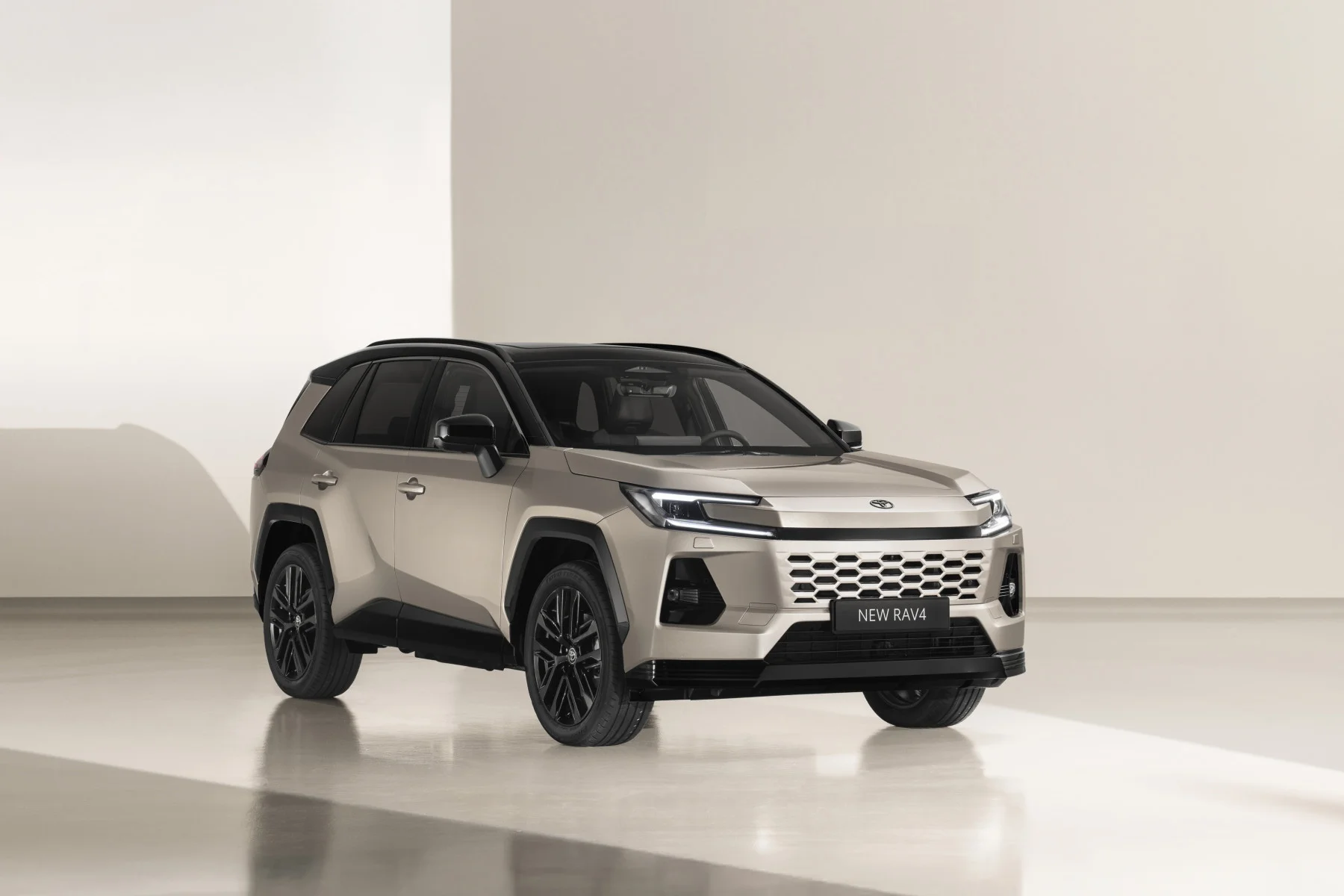
Image credit: Toyota Australia
If you have a Toyota on order, the second half of 2026 is about to feel very different. Toyota Australia has lifted its full-year sales forecast to more than 230,000 vehicles after Toyota Motor Corporation confirmed another 10,000-unit lift in the country's allocation, on top of an earlier 10,000 secured back in early June. That is 20,000 additional cars Toyota Australia now expects to deliver between July and December, and every one of them is aimed at the models with the longest local wait lists.
For CarSorted shoppers, the practical read is simple. The RAV4 Hybrid AWD at $52,340 before on-roads, the RAV4 XSE PHEV AWD at $63,340, and the bZ4X Touring AWD at $69,990 are the three cars sitting on the longest queues right now, and they are the three cars Toyota has specifically flagged as getting the extra allocation. If your dealer quoted you a Q1 2027 delivery in June, this is the announcement that might pull you back into calendar 2026.
Three Lifts in Four Months
This is not a one-off announcement, it is the third forecast lift Toyota Australia has issued in 2026. The pattern makes the story more interesting than the raw numbers on their own.
| Announcement | Full-year forecast | What triggered it |
|---|---|---|
| April 2026 | Over 210,000 | Strong Q1 deliveries, base forecast lift |
| Early June 2026 | 220,000 | First 10,000-unit extra allocation locked in |
| Late July 2026 | More than 230,000 | Second 10,000-unit extra allocation confirmed |
A forecast lift is one thing. A forecast lift that comes with an actual VIN-attached allocation from head office is another. Toyota Motor Corporation does not send extra cars unless a market has proven the demand is there, which is why the previous two announcements landed with 10,000 additional units apiece rather than a vague pledge. The second-half of 2026 will show whether Toyota Australia can actually deliver on the ambition, because it needs roughly 134,859 new-vehicle deliveries between July and December to clear the 230,000 target, having sat at 95,141 units at the June cutoff.
Where the H1 Number Came From
The context matters. Toyota's first-half tally of 95,141 sales is more than 25,000 units down on the same window in 2025, driven almost entirely by the RAV4 and HiLux model changeovers that emptied dealer stock through Q1 and Q2. The refreshed sixth-generation RAV4 Hybrid and RAV4 PHEV only started reaching dealers from late June, and the updated HiLux is not far behind, so the H1 slump was largely a supply story rather than a demand story.
On the demand side, the June VFACTS numbers back that up. Toyota shifted 19,124 vehicles in June alone, its biggest single month of the year and just 243 units clear of BYD, in what CarSorted covered as the biggest month of new-car sales in Australian history. That volume, plus the incoming supply catch-up on RAV4 and HiLux, is what makes 134,859 second-half deliveries plausible even from a slow start.
The Five Models Getting the Extra Cars
Toyota Australia has been specific about where the second 10,000-unit allocation lands. These are the models flagged by name:
| Model | Powertrain | Starting price (before on-roads) |
|---|---|---|
| Toyota RAV4 GX 2WD Hybrid | 2.5L petrol hybrid | $45,990 |
| Toyota RAV4 XSE PHEV 2WD | 2.5L PHEV, 100km WLTP EV | $58,840 |
| Toyota bZ4X (updated 2026) | Battery-electric | $66,990 (AWD from $67,990, Touring AWD $69,990) |
| Toyota HiLux SR5 diesel | 2.8L 4-cyl turbo diesel | $58,190 |
| Toyota Corolla Cross GX Hybrid 2WD | 2.0L petrol hybrid | $37,440 |
RAV4 is the obvious focus. The sixth-generation RAV4 rolled out in six grades including Toyota's first Australian PHEV, with a claimed 100km WLTP electric range. Demand ran well ahead of Toyota's early forecast on both the Hybrid AWD and the PHEV grades, which is why the extra allocation skews so heavily to that model.

Image credit: Toyota Australia
HiLux gets a similar bump. The current N70 has been running on tight supply through the first half of the year while Thailand production balances against the incoming updated model, and the extra allocation is targeted at private and small-fleet buyers who cannot easily wait for their next quote. If you asked your dealer for a HiLux SR5 in April and were told September, that should now shift.
bZ4X Is the Quiet Story
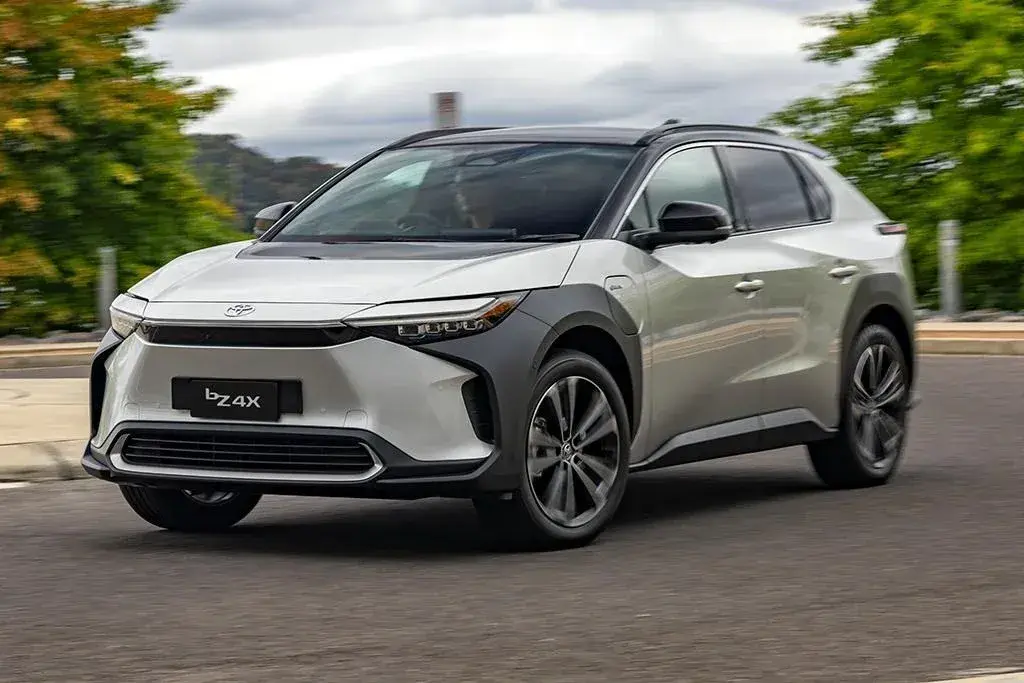
Image credit: Toyota Australia
The number that stood out for us is the bZ4X forecast. Toyota registered just 1,041 bZ4X units in the whole of 2025. The updated MY26 bZ4X, plus the new bZ4X Touring AWD flagship, has already delivered a sales lift of around 169 per cent year-on-year, and Toyota is now openly forecasting more than 5,000 bZ4X sales in 2026. That would put the bZ4X well inside the top-selling EVs in Australia for the year, and it explains why part of the extra allocation is going to a car that was on quiet dealer clearance in 2024.
For salary-package buyers, this matters. The bZ4X AWD and the bZ4X Touring AWD both fall inside the current fuel-efficient LCT threshold at $91,661 and stay FBT-exempt on a novated lease, and demand inside the order book has skewed heavily to the AWD grades. A guaranteed extra allocation makes a 2026-plate delivery on those grades a lot more likely.
Toyota's Message: Not Playing the Ship-Docking Game
The other thing worth noting is the tone. Toyota Australia's John Pappas was asked why Toyota does not throw ship-arrival ceremonies for its allocations the way BYD has for its incoming shipments to Port Melbourne. His answer, per the CarSauce write-up, was straight: "No, that's not our style." The follow-up line was the useful bit: "It's all about for us reducing lead times for our customers."
Read that alongside the 20,000-unit second-half allocation and it makes sense. Toyota is not chasing a headline moment, it is trying to work down a genuinely long wait list. Anyone who has watched a dealer allocation board over the last twelve months knows that RAV4 Hybrid AWD, RAV4 PHEV and bZ4X AWD have been running three to six months out on delivery. If Toyota can pull most of that back inside three months by December, the change of tone matters to buyers who cared about the wait, not the fanfare.
The BYD Context
You cannot read this announcement without reading it against BYD. As of the June cutoff, BYD Australia sat at 52,335 YTD sales, up 141.1 per cent on the same window in 2025. BYD closed the gap to Toyota in June to just 243 units, sold three cars inside the national top-ten (Sealion 7, Shark 6, Atto 2), and has cars docking in Port Melbourne roughly every two weeks. If BYD sustains the H1 pace, it lands the year somewhere between 105,000 and 115,000 units. Toyota is not trying to match that share, it is trying to make sure the H1 gap does not narrow further.
The extra allocation is aimed directly at the segments where BYD hurts most. RAV4 Hybrid AWD versus BYD Sealion 7, RAV4 PHEV versus BYD Sealion 6 DM-i, HiLux SR5 versus BYD Shark 6. Those are the head-to-head fights Toyota Australia has been losing on availability rather than price for most of the year. Fixing the availability side is the point of this announcement.
Safety Story on the Extra Stock
The five models named in the second 10,000-unit allocation come with different ANCAP standings, which matters if you are buying under a workplace policy or on a novated lease that requires a minimum star rating. Corolla Cross Hybrid, HiLux and current-generation RAV4 all carry 5-star ANCAP results from earlier assessments. The new sixth-generation RAV4 is not yet rated because it launched too recently for ANCAP to complete its own protocol, and the RAV4 PHEV falls under the same not-yet-rated status. The bZ4X carries a 5-star ANCAP result from 2022 that is still current for the MY26 update.
Bottom line: if the ANCAP star is a hard requirement, the extra allocation on Corolla Cross Hybrid, HiLux and bZ4X is unambiguous. On new-shape RAV4 and RAV4 PHEV, expect the rating to arrive later this year and be prepared for a not-yet-rated line on your paperwork in the meantime.
How It Compares On CarSorted's Data
This is where our own data sharpens the story. On CarSorted, the RAV4 GXL Hybrid AWD lists at $52,340, the RAV4 XSE PHEV AWD at $63,340 with 227kW and 95km WLTP electric range, and the RAV4 GR Sport PHEV AWD flagship at $66,340. Cross-shopped against the incoming allocation, the RAV4 PHEV is the one where availability changes the buying decision most. The Tesla Model Y RWD at $55,900 driveaway is genuinely available today, so if you are on a novated lease trying to lock in a 2026 plate, the Model Y wins on time-to-delivery even if the RAV4 PHEV wins on flexibility.
On the ute side, the Toyota HiLux SR5 diesel at $58,190 sits on the CarSorted directory with 150kW/500Nm and a running cost we calculate at around $12,800 a year for a private buyer. Against the BYD Shark 6 Performance at $70,900 driveaway with 350kW and 100km of WLTP EV range, HiLux still wins on tow rating (3,500kg braked versus 2,500kg on the current Shark), servicing cost and resale, but loses on outright grunt and running cost per kilometre. The extra allocation gives buyers in that cross-shop a reason not to jump ship on a wait list alone. If you were leaning HiLux but ready to defect to a Shark 6 or a Chery Stockman PHEV to actually get a car in the driveway, the Q3 delivery window on HiLux is now much more competitive.
Warranty and Service
Nothing changes on the ownership side. Toyota Australia continues to back the RAV4, HiLux, Corolla Cross and bZ4X with a 5-year unlimited-kilometre warranty, extendable to seven years on the powertrain if the car is serviced through the Toyota dealer network. The bZ4X traction battery carries a separate 8-year or 160,000km warranty, upgraded to 10 years or 200,000km if you keep the car on Toyota's recommended annual battery health check. Capped-price servicing sits at $250 per service on the RAV4 Hybrid for the first five years or 75,000km, and $250 per service on Corolla Cross Hybrid on the same schedule. HiLux SR5 diesel capped-price servicing is $290 per service across the first five services.
What This Means For Buyers
If you have already placed a deposit on a RAV4 Hybrid AWD, a RAV4 PHEV, a bZ4X AWD, a HiLux SR5 or a Corolla Cross Hybrid, the practical answer is to call your dealer this week and ask for a fresh delivery quote. Allocation lifts do not always show up immediately in dealer management systems, but they do show up over the next four to eight weeks as the second-half production plan lands. A delivery quote that was Q1 2027 in June has a real chance of pulling back to Q4 2026 on the models specifically named in the extra allocation.
If you have been waiting to see how RAV4 PHEV shakes out before signing, this is a signal that Toyota is committed to the model in Australia for the long haul. Head office does not send an extra 10,000 units to a market where the local team is unsure about a nameplate. On the CarSorted directory the XSE PHEV AWD at $63,340 is the sweet-spot grade for anyone who does a 30 to 60km daily commute, because that 100km WLTP electric range covers the round trip on battery alone before the 2.5-litre petrol engine ever needs to touch the fuel tank. Charging on a 15A home outlet takes about seven hours, on a 7kW wallbox about 2.5 hours. Neither is fast, but for a car that runs on petrol when the battery is flat, it does not need to be.
Cross-shopping across our data, the buyer who benefits most is the salary-packaging bZ4X AWD Touring customer. That car sits under the $91,661 fuel-efficient LCT cap, qualifies for FBT-exempt novated lease treatment, and had a delivery timeline that was frankly discouraging until this week. Extra allocation on that grade pulls it back into a genuine 2026-plate window, and against the Tesla Model Y AWD or Cupra Tavascan VZ, the bZ4X Touring AWD now has both the LCT position and the physical availability to compete.
Line up your options on the Toyota Australia directory page, or head to CarSorted compare to run RAV4 PHEV against Sealion 6, or bZ4X Touring against Model Y AWD side-by-side. The extra 10,000 cars change availability. What they do not change is which model is right for your driveway, and that is still the maths worth doing before you sign.
Disclaimer: Sales figures, forecast targets and model allocations are sourced from Toyota Australia's official press release and its Vice President of Sales, Marketing and Franchise Operations. Pricing is before on-road costs unless stated as driveaway. Actual delivery timing for any specific grade or colour depends on dealer allocation and current stock, so treat the delivery-window guidance in this article as directional rather than a Toyota commitment on any individual order.
Compare these picks side by side
Stack 6 of them on 200+ specs, price, safety and running cost in one view.
Compare all 6 nowFrequently Asked Questions
How many cars does Toyota expect to sell in Australia in 2026?
Which Toyota models are getting the extra stock?
Will this cut Toyota RAV4 wait times?
Where does Toyota sit versus BYD in Australia in 2026?
Is 230,000 sales a record for any brand in Australia?
Does the bigger stock plan include any EVs?
New cars, real prices, straight to your inbox
Join the CarSorted mailing list for new-model launches, price drops and drive-away deals, honest reviews, and founding-member pricing on the upcoming CarSorted Pro Report.
- New-model launches
- Price drops & deals
- Honest reviews
No spam, unsubscribe anytime. By subscribing you agree to receive marketing emails.
Disclaimer: All information in this article was believed to be correct at the time of publishing (31 July 2026). Prices are manufacturer recommended retail prices (RRP) and may vary by state, dealer, and options. Specifications, government incentives, and rebates can change without notice. Always verify details with the manufacturer or relevant authority before making a purchase decision. Running cost estimates are based on average Australian driving conditions at 15,000 km/year. CarSorted does not accept payment for recommendations or rankings.
Written by Uzzi, CarSorted Editorial Team · 31 July 2026 · how we research
Comments (0)
Sign in to join the conversation
No comments yet. Be the first!